Founder Notes

Notes from the founder.

What I am seeing in beauty, fragrance, retail, and consumer behavior, and what it means before you spend money on it.

Hostile Brands banner: We determine what deserves to exist. Then we build it. Portrait of founder Kelly Rhoades.

Section 1 · Founder POV

Kelly’s own posts, in her words.

Attention is not demand

October 2026 · Kelly Rhoades, personal LinkedIn post · The thinking behind the Second-Buy Test

Originally posted on LinkedIn: View the original post

I'm convinced the internet is running one giant experiment to see how much money people will spend on nonsense!

Have y'all seen the faceless digital marketing gold rush?! People charging $500, $1,000, even $2,000 for recycled Google links and templates, promising "passive income" while they rake in $50K, $100K, even half a million dollars a month. Am I the only one sitting here thinking... they exist because someone keeps BUYING it?!

I'm all for entrepreneurship. Digital products can provide real value. But if your business depends on people buying from you because making money scares them, versus actually delivering something worth the price, you're not just building a business. You're building your empire on people's desperation, and no money is worth that. I've spent the last 20 years teaching people how to build businesses, and it truly breaks my heart to see scammers making hundreds of thousands of dollars while my students work so hard to do things the right way.

Meanwhile, look at actual consumer businesses.

Bath and Body Works is testing small-batch fragrances before scaling. SMART. But a three-minute sellout doesn't tell me the product deserves to be a franchise. Get a second buy, and then we'll talk.

Boka and OLIPOP PBC made soda-inspired toothpaste. I love the creativity! But after the TikToks, will anybody buy it again? In an oversaturated toothpaste market, "cute collab" is not a value proposition. Follow the customers. If they're not in it, you can't CPG math your way out of it.

And AI? Let me hold your hand when I tell you that slapping AI onto something doesn't make it innovative. It makes you loud.

I've spent roughly 30 years in beauty watching companies spend fortunes developing products nobody asked for and consumers didn't truly want. The failure isn't engineering. It's obscurity. Companies who don't know their customers or their real needs will manufacture or develop what they want, expensive IP included, instead of what customers will continue to buy.

We're STILL confusing attention with demand, sales with loyalty, and having an idea with having a business. Attention is noise. The second purchase is evidence. Took a while for the industry to catch on, but the concept of needing a second sale as a litmus test has been around for a long time. The first purchase is easy. But the brand that proves worth its existence beyond that initial purchase is the real winner.

Hostile Brands.

I don't give a damn whether you CAN manufacture something. I want to know whether you SHOULD. Who's going to want it? Who's going to buy it MORE than once? And what are you doing that actually makes it worth building?

That's the thinking behind our Second-Buy Test. Getting somebody to open their wallet once isn't the hard part. Getting them to come back, telling someone about it, and disrupting themselves with your better option? THAT is what determines whether it survives the noise. Attention does not equal demand. Attention was never evidence.

Here's another unpopular opinion: Not every idea deserves funding. Not every collaboration deserves to exist. Not every product deserves shelf space. Not every trend deserves a business. And not every idea can scale as an actual business, no matter how many of your friends said it was a "great idea."

Sometimes the most valuable person in the room is the one willing to say, "This is a terrible fucking idea." (Apologies to my mother-in-law, I said what I said.)

I'd rather help someone avoid wasting $100,000 than get paid to tell them what you want to hear. I will be honest with you even if it's what you do NOT want to hear.

If you're a founder, brand, retailer, manufacturer, or investor who wants someone to challenge your idea before the company spends money they'll never recover, send me a private message.

Stop building for the noise. Build for the opening.

Hostile Brands | HouseOfHostile.com

Sources

Bath & Body Works Hype Lab small-batch fragrance test, reported by Glossy: Glossy · Boka and OLIPOP Pomegranate Sparkle toothpaste collaboration, reported by Glossy: Glossy

The same Glossy report on Hype Lab notes sales were not the primary metric; Bath & Body Works was looking at consumer feedback and response to inform future products. The Glossy report on Boka and OLIPOP describes the collaboration as designed to stop the scroll, with awareness as its aim.
Kelly Rhoades: Attention is not product-market fit. Who the fuck is buying this twice?

Same headlines, different perspective

October 2026 · Kelly Rhoades, personal LinkedIn post · Reading the news for opportunity, and the pitch for Hostile Brands Commercial Intelligence

Originally posted on LinkedIn: View the original post

I'm going to say something that will probably piss off a few people in the beauty industry, but that's the thing about real talk... Sometimes it's a little uncomfortable.

Some companies spend millions trying to figure out what consumers want while ignoring the people who can actually tell them. You don't need another focus group about whether someone likes vanilla, or a hundred million dollars spent on technology that helps you identify what a consumer might buy, when you can simply ASK them what they want and then listen to the answer.

This morning I was reading about fragrance, retail, AI, healthcare, and consumer spending. Most people read headlines. I read them for opportunity.

Givaudan reports strong fragrance growth. Great. But are brands studying WHY people buy? How they layer fragrance? Do they know what happens after a launch? Or just what it sold in the first week?

MERIT is launching another fragrance. That could be smart. But did the first bring in new customers? Are people actually using it? How many are willing to buy a dumbass $100 fragrance blind, sight unseen because they like the packaging?

Meanwhile, consumers are watching their wallets, and some executives still think expensive packaging is the answer. It's not.

And AI?! Let me hold your hand when I tell you slapping AI onto something doesn't make it innovative. It makes you loud.

Then I read about a pharmaceutical partnership where one company develops the intellectual property while another company makes the money. If you are the company holding the IP, you better have a strategy around value, control, and leverage, or you're just building someone else's asset.

Speaking of partnerships, can we stop calling vendor services "strategic partnerships"?! If I bring a brand and you just sell it to me, that's not a partnership. That's a transaction. A real partnership has leadership development, collaborative marketing, dialogue, and an ACTUAL channel strategy. If you don't have any of that, it's not strategic. It's shopping.

I've spent roughly 30 years in beauty, working with consumers, teaching cosmetology, evaluating products and developing brands. I have watched companies call an idea "innovation" simply because it is new and "premium" because it is expensive. Most of the time it's just a product with an inflated price tag and a repetitive backstory.

Sometimes the people in the boardroom are the furthest removed from the people in the beauty aisle.

So here's my pitch: If you're a brand, retailer, manufacturer, investor, or innovation team, hire me for consultative partnerships or Hostile Brands Commercial Intelligence. We don't just track trends, we think through what they actually mean before you commit and spend on unnecessary CAPEX.

Bring me your product, your next idea, or the category you're considering entering. I'll tell you what I ACTUALLY think, whether you want to hear it or not. Then I'll help you figure out how to get it in the hands of customers who'll buy it again because they love it!

I don't just want to know whether somebody will buy your product. I want to know who's going to buy it twice.

Hostile Brands | HouseOfHostile.com

Sources

Givaudan’s nine-month sales release, October 13, 2026: Fragrance and Beauty sales of CHF 3,150 million, up 8.8% like-for-like in January to September 2026, with Fine Fragrance up 15.3%: Givaudan nine-month sales release · MERIT’s second fragrance, New Wave L’Extrait de Parfum, launched October 22, 2026, $92, reported by Perfumer & Flavorist: Perfumer & Flavorist

The Givaudan release reports growth; it does not say why people buy, or anything about layering or repeat purchase. The MERIT report confirms the launch; it does not answer whether the first fragrance brought in new customers or repeat buyers. Those are Kelly's questions, not the sources' answers. The pharmaceutical partnership example in the post names no companies and cites no source; it is Kelly's interpretation of an arrangement she read about.

Kelly Rhoades: I find the gap everyone else skims past. Then I turn it into strategy.

A fragrance shift I noticed on a GLP-1

August 28, 2026 · Kelly Rhoades, personal LinkedIn post · Personal experience, with the limits stated in the post itself

Originally posted on LinkedIn: View the original post

Anyone else on a GLP-1 feel like their brain quietly fired half its addictions and hired perfume as the replacement? Alcohol is basically repulsive to me now. Gambling? Gone. Random impulse spending? Way down. Food noise? Dramatically different. But fragrance? Apparently my brain said, "Excellent. We will now smell like vanilla cake, caramel, marshmallows and financial irresponsibility!"

I genuinely thought this was just me, or maybe another weird perimenopause plot twist, until I saw a Facebook discussion with hundreds of women describing the same sudden obsession with perfumes, especially sweet gourmand fragrances. There is NOT currently a medically recognized "GLP-1 perfume addiction," and I'm not pretending Facebook comments are a clinical trial. But GLP-1 medications are being studied for their effects on reward, craving and addictive behaviors, including alcohol use. So when a large group of people independently starts describing the same oddly specific behavioral shift, I think it's worth paying attention to.

The part I find most interesting isn't actually the perfume. It's the bigger question, if GLP-1 medications turn down the reward signal attached to food, alcohol, gambling, impulse shopping and other behaviors, what happens to that need for novelty, pleasure and sensory reward? Does the brain redirect it somewhere else? Because apparently mine redirected it directly to the fragrance counter!

Someone please study this. I volunteer as tribute. I'll bring samples.

Sources

GLP-1 receptor agonists are being studied for effects on reward, craving, and addictive behaviors, including alcohol use disorder, as reviewed by Leggio and colleagues, with authors from the National Institute on Drug Abuse and the National Institute on Alcohol Abuse and Alcoholism: Leggio and colleagues, review · A small Phase 2 trial, Hendershot and colleagues, JAMA Psychiatry, February 2025, randomized 48 adults with alcohol use disorder and found improvement on some, not all, alcohol outcomes over 9 weeks: Hendershot and colleagues, JAMA Psychiatry

The research is early; the review describes the clinical trial evidence as limited and mixed. No GLP-1 medication is FDA-approved to treat addiction, as the Harvard Gazette reports: Harvard Gazette, February 18, 2026 · and the post does not claim one is.

I told y'all, the GLP-1 signal got louder

October 2026 · Kelly Rhoades, personal LinkedIn post · A follow-up on the August 28 post, tracking the signal as the industry started discussing it

Originally posted on LinkedIn: View the original post

I TOLD Y'ALL!!

Back on August 28, I posted about something weird I had noticed in myself after being on a GLP-1. For the first time I can remember, my perfume cravings had shifted: less heavy sweetness overload, more clean scent, bigger curiosity about woods, incense, musk, amber, and even vetiver.

I wasn't claiming I discovered anything, and I sure as hell wasn't pretending Facebook comments were peer review. I was just sharing my experience, and honestly what stuck with me was how many people recognized themselves in it.

Then on September 21, I came back to the subject because the signal had gotten even louder. A TikTok was sitting at almost 20K likes and over 3.5K comments where people were suddenly talking about how much they didn't want to smell like vanilla, or how they were tired of opening a perfume bottle and getting punched in the face by syrup.

I said then that sometimes the market starts telling you something long before anyone has a neat research paper to explain it.

Well... here we are.

Now the fragrance industry is openly discussing GLP-1 users, changing fragrance preferences, gourmand overload, and how new consumers are losing their patience for sweetness.

That's why Ilias Kakis' post caught my attention this morning. He's looking at the same issue from the perfumer and industry side, which is a lot more interesting than my original post, where I was basically telling the internet that I'd stopped wanting to smell like a glazed donut.

And THIS is what I mean when I say I pay attention to consumer behavior before everyone agrees it matters!!

Sometimes people ask what I mean when I say I spot things early... This. I mean this.

Note on this entry: on LinkedIn this post reshares perfumer Ilias Kakis's newsletter on the same question. His words stay on LinkedIn; only Kelly's words appear here.

Sources

The source being discussed: Ilias Kakis, “GLP-1 & Fragrance Preferences: A Big Thing?”, Scent of Tomorrow newsletter: Ilias Kakis, Scent of Tomorrow

Perfumer & Flavorist, “GLP-1 Drugs Are Reshaping Scent Preferences and Perceptions,” May 18, 2026: Perfumer & Flavorist · Corroboration: Personal Care Insights, “Plate to perfume: Are GLP-1s fueling the gourmand fragrance boom?”: Personal Care Insights

The Perfumer & Flavorist article itself states there are no large controlled studies yet confirming a direct causal link between GLP-1 drugs and changes in olfaction. The TikTok figures in the post, almost 20K likes and over 3.5K comments, are as Kelly reported them from the post she saw.

What consumers actually do beats what they say in surveys

October 2026 · Kelly Rhoades, personal LinkedIn post · Fragrance layering, and what price means to the person wearing it

Originally posted on LinkedIn: View the original post

This is exactly why I pay attention to what consumers actually do, not just what they say in surveys. Surveys have a way of picking up what people think they should want. Actual behavior is a lot more honest.

A few weeks ago, my sister-in-law wore this combination because I layered MUGLER's Alien, Maison Francis Kurkdjian's Baccarat Rouge 540 Extrait and Lattafa's Khamrah together because I almost never wear fragrance exactly the way it comes out of the bottle. Apparently it's ready with 4.5 million views on TikTok.

The point of the story is she had no idea what she was wearing because she wasn't wearing perfume to identify it!! She'd just put on something her family told her smelled "nice and sweet." She wasn't looking for a fancy label. She was looking for something she liked.

Then she saw the price of Baccarat Rouge 540. Suddenly it was, "My husband would kill me," "I'd have to hide it from him," and "That's not worth it, even if it smells that good."

She didn't know I was wearing Baccarat Rouge. She didn't know what any of the fragrances cost. She didn't know what any of the brands were. She had NO IDEA what she was smelling!!! All she knew was that she loved the way it smelled.

Consumers don't always care about owning the expensive bottle nearly as much as brands think they do. Often, they care more about smelling the fragrance on themselves for a price they feel comfortable with. The bottle and brand can add value, but they aren't always what people are paying for.

That is also why I think there is still so much opportunity around fragrance layering, personalization and accessible alternatives. When people begin to explore making a fragrance their own, they are creating relationships with products that brands did not design in the first place. Consumers, my friends, are ALREADY doing it!! And the market around them is responding.

Apparently my habit of mixing half my fragrance collection together has turned into accidental consumer research, and I love it!

Do you wear fragrance the way it was created, or are you mixing and layering yours too?

Note on this entry: the 4.5 million TikTok view count in the post is as Kelly reported it from the video she saw.

Section 2 · Hostile Brands

Posts from the Hostile Brands company page.

Four other recent company posts are collaborative versions of posts already in Section 1, so they are not repeated here. The Cosmetics Business post appears in Section 3. The same note as in Section 1 applies here: these posts are the company’s words; the FAQ describes the method.

SKIMS is moving into beauty. Will anyone buy it twice?

October 2026 · Hostile Brands, company LinkedIn page, posted with Kelly Rhoades · SKIMS moving into beauty, and why hair loss is not one market

Originally posted on LinkedIn: View the original post

The October 2026 step was a limited-edition beauty-tool collaboration, the SKIMS x Jenny Patinkin Cryo Glow Globes, not a full beauty-line launch. The planned expansion into beauty, skincare, and fragrance is supported by the SKIMS press release cited below.

I swear half the market acts like getting someone to buy something once is the finish line. It's not.

That's what stood out to me in today's industry news. SKIMS is officially moving into beauty. Will people buy it? Of course they will. It's SKIMS. That tells me absolutely nothing! I want to know whether people are still buying it six months after the launch, and if they're buying it again because they love the product, not because they got swept up in the hype. The Second-Buy Test is the only measure of success, and a lot of people aren't looking at that.

SKIMS is making an intelligent move by entering a category where trust is already built with body care. They already own the customer relationship, they just need to extend it to a new product. Their brand isn't just about beauty, it's about the trust they've already built. To win, SKIMS has to build [a] category where people will buy again because they see the value in the products. Otherwise, this entire launch is just more noise. And they need to be smart about it, because beauty is a whole different world. If SKIMS can leverage the trust they already own in the customer's head, THEN I'm interested.

Hair loss and scalp care is getting even more interesting because the customer is changing. This is something I've been tracking for years, and it's about a lot more than the latest trend.

"Hair growth serum" is not one market! A woman losing density during perimenopause does not necessarily have the same problem or buying motivation as a 28-year-old with postpartum shedding or a man noticing a receding hairline. In this same vein, you have entire cultures where hair loss is stigmatized. It's still taboo in some people's minds, yet companies are stuck selling the same vague promise: "This serum makes your hair grow," and it's a lie. This is what I mean by understanding the customer's problem BEFORE you launch the solution.

And then there's AI because apparently I can't go one day without finding another example of the boring stuff that actually makes money. In AI, people keep making the same mistake: thinking the model is the product. It's not. The model is getting cheaper every day. The value is in the data, expertise, evaluation, and the infrastructure that makes the output actually work in the real world. That's usually where I'm looking.

Everybody else is watching the thing that just launched. I'm watching what happens NEXT. How does a shift impact what people do next? Who buys it again? What new problem did this create? What customer did everybody lump together who actually has a different need?

That is the part I love. Not chasing trends after they're obvious, but figuring out what the hell they actually mean.

If you're sitting on a product, category expansion, partnership, or "this could be huge" idea and you want someone to tell you the truth before you spend money, send it my way. Let me and my team put it through the Second-Buy Test first, before you waste time and money.

That's Hostile Brands.

HouseOfHostile.com

Sources

SKIMS acquired SKKN by Kim and will expand into beauty, skincare, and fragrance, with launches planned for 2026, SKIMS press release, March 25, 2025: SKIMS press release · The October 2026 step itself, the SKIMS x Jenny Patinkin Cryo Glow Globes, the brand’s first beauty collaboration, launching October 29, 2026 at $78, reported by Fashion Business World: Fashion Business World · Consumers and AI-generated content, from two separate Gartner surveys: a survey of 1,539 U.S. consumers conducted in October 2025 found 50% would prefer to give their business to brands that do not use GenAI in consumer-facing messages, advertising, and content: Gartner, May 2026 · a survey of 1,006 U.S. consumers conducted between May and June 2026 found 65% believe brands are producing too much AI-generated content in their marketing materials, 57% say it has made them less trusting of brand messaging overall, and 35% now rely on influencers less for shopping information: Gartner, September 2026 · Billion Dollar Boy’s MUSE report, The Real Impact of AI on the Creator Economy, backed by research covering 6,000 marketers, creators, and consumers across the UK and US, found only 26% of consumers prefer AI-generated creator content, down from 60% in 2023, and that over half agree AI has decreased trust in creator content: Billion Dollar Boy

The October 29 launch on both brands’ official websites at $78 is also reported by Popbee: Popbee

The AI figures are survey findings from industry and agency research, each scoped to its own surveyed sample, not a universal or academic finding. No source is cited for the hair-growth line; it rests on the editor's note above.

Just because you CAN launch something doesn't mean you SHOULD

October 2026 · Hostile Brands, company LinkedIn page, posted with Kelly Rhoades · CÉCRED moving into hair fragrance, AI behind the scenes, and K-beauty authentication

Originally posted on LinkedIn: View the original post

Here's the part companies keep overcomplicating: just because you CAN launch something doesn't mean you SHOULD. CÉCRED moving from hair care into hair fragrance? That makes sense to me immediately. Same customer, same ritual, same brand trust, just a new way to stay in the routine. That's how you extend a brand without losing what made people buy it the first time.

Then you have research showing consumers are getting sick of AI-generated everything and trusting influencer content less and less. The smarter brands I'm watching are using AI behind the scenes while putting real people back in front of the customer. The ones who are getting it wrong are using AI to replace people, squeeze costs, or automate the entire experience. Humans still buy from humans. The brands that forget that are going to learn that lesson the hard way.

Then there's AI itself. Everybody is obsessed with the shiny part, but some of the biggest money is in the boring part. The valuable part of AI is increasingly becoming the data, expertise, evaluation, and infrastructure around it. The model is getting cheaper every day, but the ability to keep it reliable in the real world is where the money lives. That's why companies like Snorkel AI are quietly becoming unavoidable. Which brings us to K-beauty, where South Korea is pushing to authenticate genuine K-beauty because the market is flooded with counterfeits. That is not just a trademark issue. That is also an infrastructure story. And of course, the bigger the market, the more value there is in the infrastructure that protects it.

That is exactly how my brain works. I don't just look at the thing everybody is talking about. I look at how certain industries are solving things in areas I may not even be a part of, and then I ask what that means for the customer, the product, and the market they are playing in.

Same thing with the FDA moving further toward human-based testing methods. Most people see a science story. I see potential for novel inputs and new kinds of expertise that smaller companies can own before the market gets crowded.

That is why companies bring me in. Not because I can tell them what is trending now. Google or ChatGPT can do that shit. But I have this uncanny ability to sense what is going to become trendy before it becomes trendy. That's how you find opportunities others haven't seen yet.

I look at the trend and ask, "Okay, but what the hell does this actually mean?" Does this make sense for the consumer? What is the opportunity hiding here? Does this actually solve a problem for the customer or is it just noise?

Sometimes I will tell you to build it, sometimes I will tell you to change it, and sometimes I will tell you to kill it.

That answer might not be the fun one, but it may be the one that saves you the most money.

So if you have an idea, product, category expansion, partnership, or "this could be huge" moment and you want someone to tell you the truth about it before you spend money, talk to me.

That's Hostile Brands.

HouseOfHostile.com

Sources

CÉCRED’s Temple Oud Hair Perfume launched September 10, 2026, the brand’s first fragrance-focused product, Cécred press release via PR Newswire: PR Newswire · 50ml, $54, reported by Fragrantica: Fragrantica · Consumers and AI-generated content, from two separate Gartner surveys: a survey of 1,539 U.S. consumers conducted in October 2025 found 50% would prefer to give their business to brands that do not use GenAI in consumer-facing messages, advertising, and content: Gartner, May 2026 · a survey of 1,006 U.S. consumers conducted between May and June 2026 found 65% believe brands are producing too much AI-generated content in their marketing materials, 57% say it has made them less trusting of brand messaging overall, and 35% now rely on influencers less for shopping information: Gartner, September 2026 · Billion Dollar Boy’s MUSE report, The Real Impact of AI on the Creator Economy, backed by research covering 6,000 marketers, creators, and consumers across the UK and US, found only 26% of consumers prefer AI-generated creator content, down from 60% in 2023, and that over half agree AI has decreased trust in creator content: Billion Dollar Boy · Snorkel AI, a “frontier AI data lab” building the datasets, benchmarks, evaluations, and custom agents behind advanced AI, founded out of the Stanford AI Lab in 2019: Snorkel AI · South Korea’s K-Brand Government Certification System launched October 7, 2026, with consumers checking authenticity by scanning a QR code, 31 companies signed up including Amorepacific, announced by the Ministry of Intellectual Property, Republic of Korea, on the ministry’s own English news page: Ministry of Intellectual Property · The FDA’s plan to phase out animal testing requirements for monoclonal antibodies and other drugs, April 10, 2025, replacing them with human-relevant methods including AI computational models, organoids, and organs-on-chips: FDA

The AI figures are survey findings from industry and agency research, each scoped to its own surveyed sample, not a universal or academic finding. The K-brand scheme covers K-brands broadly, beauty, food, and fashion, not K-beauty only. The FDA announcement is about drug development, not cosmetics testing specifically. The source supports an anti-counterfeiting initiative; the post's phrase "the market is flooded" is Kelly's characterization, not something the source establishes. "Becoming unavoidable," said of Snorkel AI, is Kelly's opinion, not a fact the source establishes.

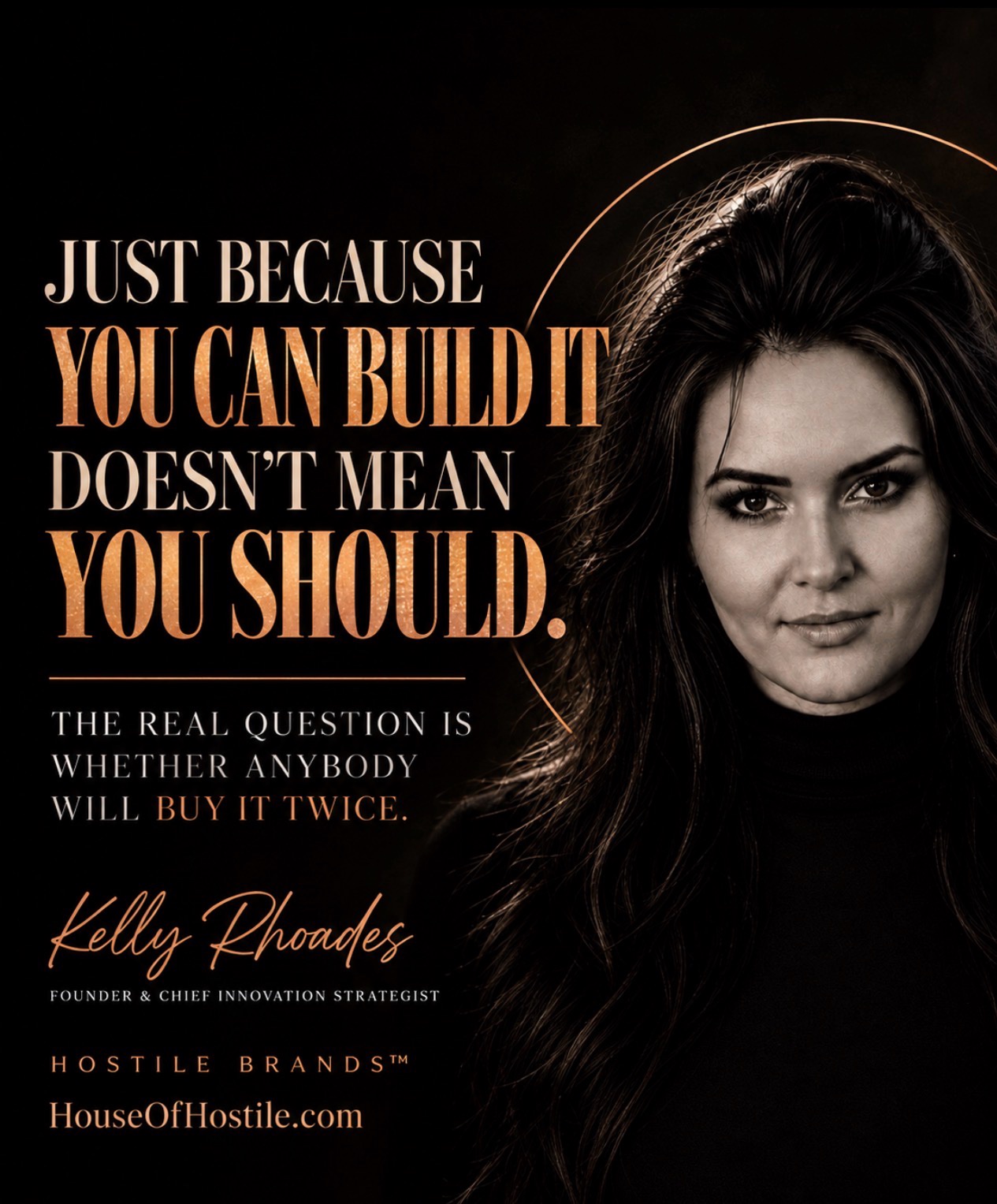
Kelly Rhoades: Just because you can build it doesn't mean you should. The real question is whether anybody will buy it twice.

Your brand gets judged before your science does

October 2026 · Hostile Brands, company LinkedIn page, posted with Kelly Rhoades · A supplement brand, and why branding is not decoration

Originally posted on LinkedIn: View the original post

My sister sent me a supplement brand this evening and asked what I thought. Within about 30 seconds, my first thought was "Is this some bullshit gimmick?!"

That was before I looked at the ingredients, the founder, the science, or even the business model. That is a branding problem!

The funny part is, once I dug in, the product itself was not nearly as ridiculous as the branding made it feel. There were legitimate ingredients and an actual physician involved. There was at least a real attempt to build something for an underserved condition. But the visual language, content style and testimonial heavy presentation made my skepticism show up before the facts ever had a chance to. And that is exactly why branding is not decoration!

Your brand is creating a conclusion in someone's head before they read your About page, your clinical rationale, your product details or your founder story. If the packaging, imagery, claims, content and overall presentation accidentally place you in the same mental bucket as businesses your customer already distrusts, you have created friction you now have to spend money undoing.

You can have a decent product and still give it a face that makes people hesitate.

I spent way too long this evening wanting to track down the founder and say, "Please let me fix your brand's face." I won't. Probably. Maybe. I might.

But there is a business lesson in it... perception is not superficial when perception determines whether anyone sticks around long enough to discover the substance. The first sale starts long before checkout. It starts with, "Do I believe you?!"

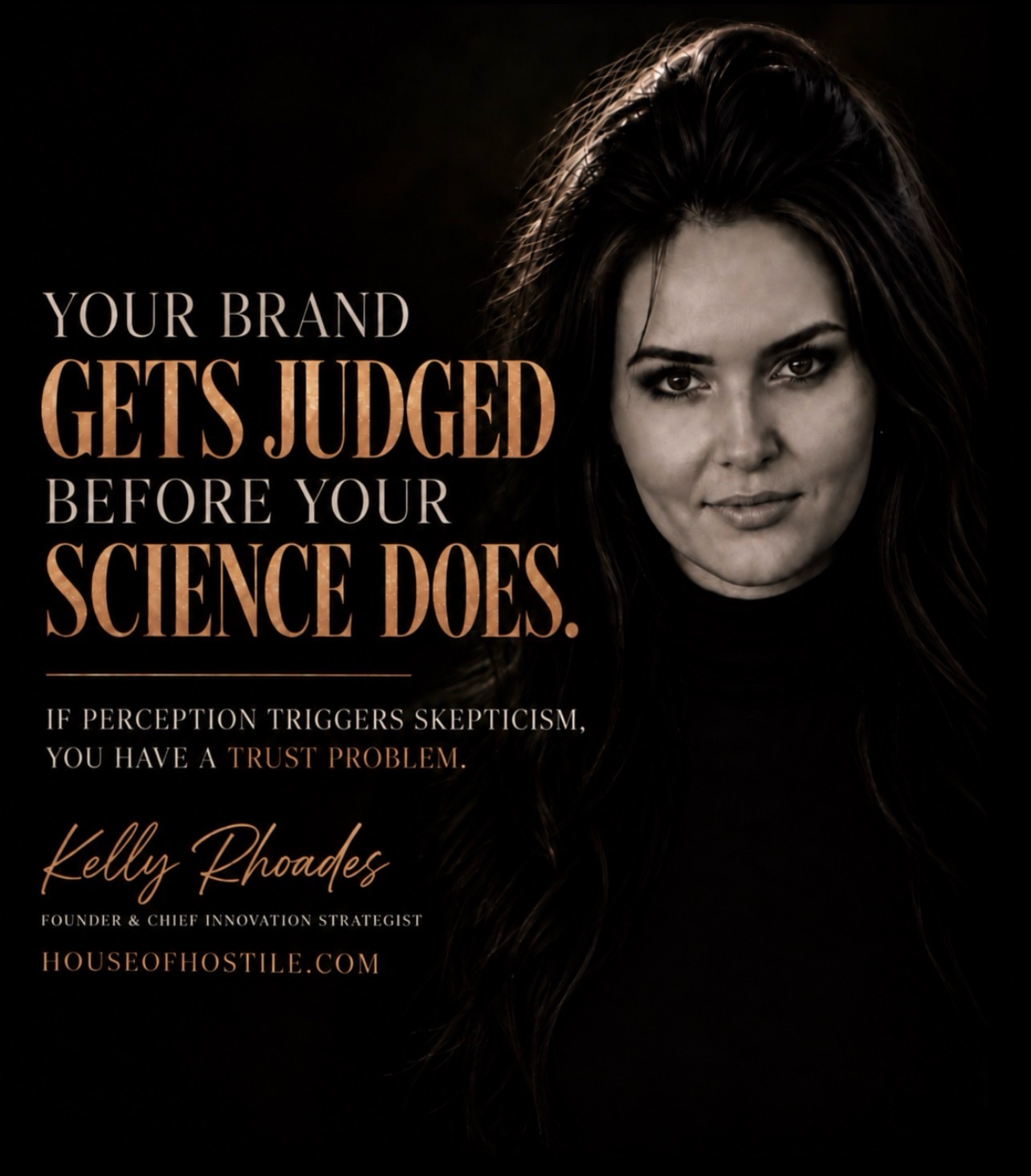
(The post's image also reads: "YOUR BRAND GETS JUDGED BEFORE YOUR SCIENCE DOES. IF PERCEPTION TRIGGERS SKEPTICISM, YOU HAVE A TRUST PROBLEM.")

Kelly Rhoades: Your brand gets judged before your science does. If perception triggers skepticism, you have a trust problem.

Trial is cheap. Repeat business is hard.

September 2026 · Hostile Brands reposted this Kelly Rhoades post · Kelly's commentary on three brand pivots through a repeat-purchase lens; no Second-Buy assessment was performed

Originally posted on LinkedIn: View the original post

Trial is cheap. Repeat business is hard.

In 30 years of evaluating consumer products, I've watched countless brands confuse launch enthusiasm with lasting demand. A strong first month does not prove a sustainable business. The real test is simple: Will customers come back and buy it again?

Three major beauty brands illustrate what can happen when a company makes a significant strategic pivot, and how the Second-Buy Test exposes whether that pivot strengthens or weakens the brand.

1. Glossier, Inc.: From DTC to Sephora

What worked: Expanding into Sephora addressed the limitations of online customer acquisition and put the brand in front of a broader audience where discovery, testing, and repeat purchase were easier.

The tradeoff: On a crowded retail shelf, Glossier could no longer rely as heavily on the controlled storytelling and experience of its direct-to-consumer channel. Its products had to compete on appearance, trial, and performance, alongside other brands, under real shoppers' scrutiny.

The lesson: Channel expansion can scale reach, but the product's value must remain obvious when the packaging, price, and online buzz no longer do the work.

2. E.L.F. BEAUTY: From value brand to cultural powerhouse

What worked: e.l.f. paired accessible pricing with strong product performance and culturally sharp marketing. The brand's strategy emphasized social media presence, influencer engagement, and rapid trend response, ultimately bringing it into the same category as prestige brands in the minds of many consumers.

The hurdle: The company had to overcome the assumption that inexpensive products were inherently low quality. The second purchase became proof that e.l.f. offered value beyond trial.

The lesson: Price may generate trial, but product performance generates the second purchase. When a brand consistently delivers on value, it earns repeat business and grows into the trust that sustains it.

3. Laura Mercier Cosmetics: Modernizing heritage artistry

What worked: The brand protected iconic products, including its Translucent Loose Setting Powder, while modernizing its packaging, shade offerings, and consumer relevance.

The risk: Chasing short-term trends too aggressively could weaken the professional artistry and timeless credibility that define the brand.

The lesson: Modernization should strengthen the core asset, not replace it. A brand should know which products can evolve, which can expand, and which should never be sacrificed for a temporary spike in attention.

At Hostile Brands, our philosophy is simple: Judgment before momentum.

Before allocating capital, inventory, or marketing dollars to a strategic shift, determine what commercial truth you are actually betting on.

That is the difference between winning the first purchase and passing the Second-Buy Test.

Which of these pivots do you think was executed best?

Sources

Glossier launched in 600 Sephora locations across the US and Canada on February 23, 2023, its first-ever retail partnership, reported by NewBeauty: NewBeauty · e.l.f. Beauty is known for affordability, averaging $6.50 per product, with e.l.f. and rhode slotting into the growing “masstige” category priced between drugstore and prestige, reported by Medill Reports: Medill Reports

The Medill source backs the positioning, prestige quality at mass prices, not the claim that consumers see e.l.f. in the same category as prestige brands; that is Kelly’s commentary. The source reports the company’s own claims about quality; it does not independently establish product performance. The Glossier source confirms the Sephora launch, not that the move improved customer acquisition, discovery, testing, or repeat purchase; those conclusions are Kelly’s analysis. Laura Mercier: the Tinted Moisturizer Oil Free relaunch came in 20 shades with new packaging in 2021, reported by Swo Magazine: Swo Magazine · and a new foundation launched in 30 shades, Flawless Lumière Radiance-Perfecting Foundation, reported by Cosmetics Business: Cosmetics Business · These support the narrower historical details only; they do not prove lasting consumer relevance or commercial success. A Vogue repositioning piece is described in secondary sources but its URL was not verified, so it is not linked here.

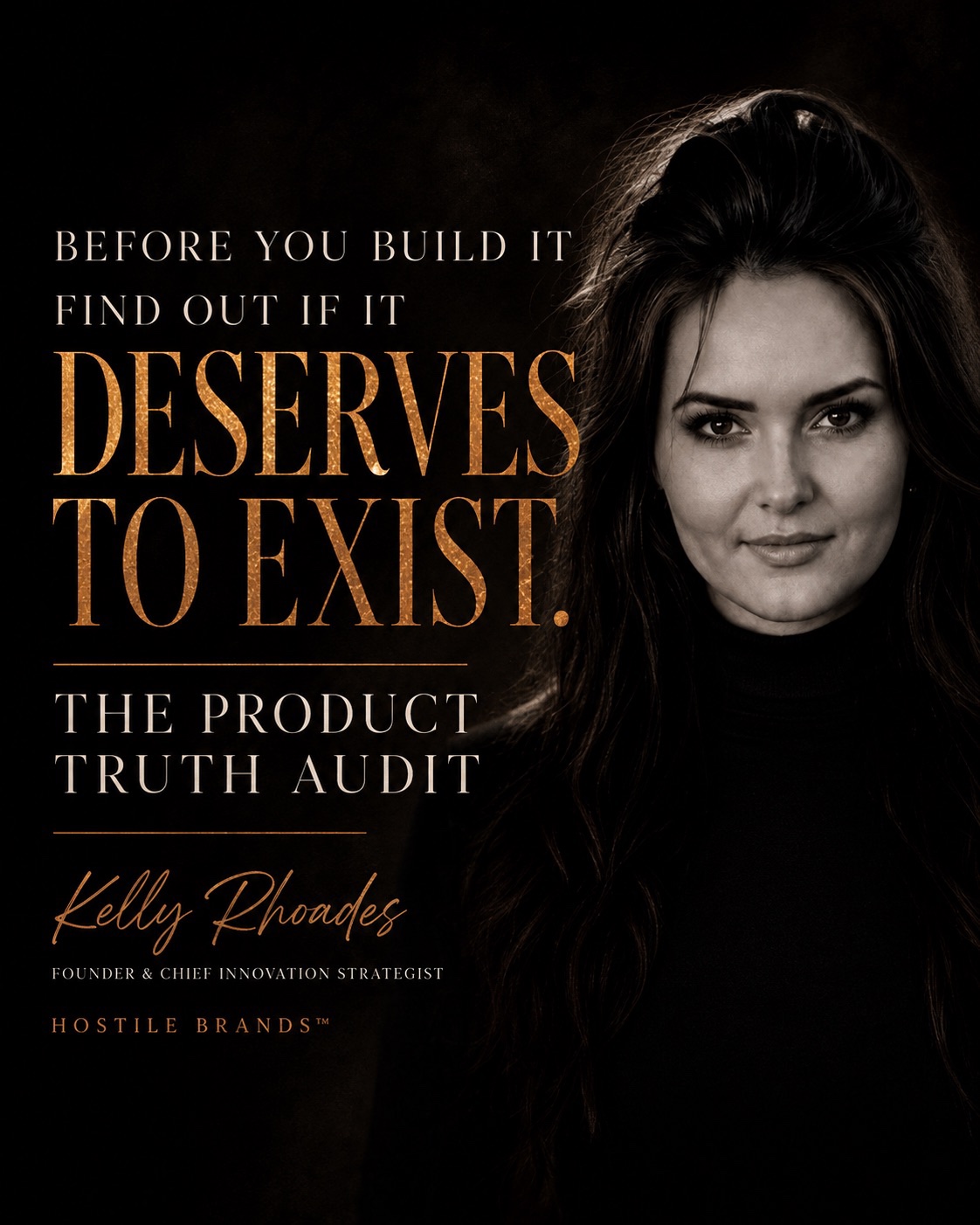
Kelly Rhoades: Before you build it, find out if it deserves to exist. The Product Truth Audit.

Section 3 · Press and Collaboration

Outside context and collaborations.

Authorship is labeled on each item so it is unmistakable who said what.

What I told Cosmetics Business about fragrance flankers

October 2026 · Kelly Rhoades, quoted in Cosmetics Business, in an article by Amanda May on Chanel, Yves Saint Laurent Beauty, and Prada introducing younger consumers to hero fragrances · The article is subscriber exclusive · Kelly's LinkedIn post about the article is below; the quote is hers, the article is Amanda May's

Originally posted on LinkedIn: View the original post

"A new iteration can bring people into the franchise, but it needs a reason to exist beyond giving the marketing department something new to promote."

That was my take in a new Cosmetics Business article on how CHANEL, Yves Saint Laurent Beauty, and Prada are introducing younger consumers to their hero fragrances. I'm all for extending a successful fragrance. But if the only explanation is a younger celebrity, a sweeter scent, and a new campaign, I'm going to ask what the customer is actually getting that they couldn't get from the original.

Thank you to Amanda May for including my perspective and giving me room to be honest about the commercial side of these launches. The article is subscriber exclusive, but the link is here: Cosmetics Business article

Take the celebrity out of it. Which of these fragrances would you actually buy twice?

Sources

Direct link to the Cosmetics Business article (the post’s short link resolves here): Cosmetics Business

Posts not included in this version

Held back, for now.

These were pulled and are available to add. Kelly decides.

  • “I blind bought MUGLER Alien, then fixed it”

    October 2026

    Held back on Roxy's note that two Alien posts are repetitive. The layering post was kept as the stronger one for commercial insight.

    View the original post on LinkedIn

  • “Confusing we CAN build this with this is actually a GOOD idea”

    October 2026

    rhode, STERIS and Xodus Medical, K-beauty authentication.

    View the original post on LinkedIn

    Sources found for this post if it is added later: STERIS signed a definitive agreement to acquire Xodus Medical for $2.1 billion at closing, close anticipated by December 31, 2026, STERIS press release, October 12, 2026. The STERIS item was an agreement at the time of the post, not a completed purchase, and the rhode patch results are Rhode's own reported 31-person consumer-perception study.

    STERIS press release · rhode Spotwear patches · rhode Pineapple Refresh cleanser

  • “What pisses me off about the word innovation”

    October 2026

    GLP-1 generics, once-weekly insulin, AI livestream hosts, Snorkel AI.

    View the original post on LinkedIn

  • Di Trapani's Italian Bistro, Rolla MO

    October 2026

    Customer loyalty is people and relationships, not a points system.

    View the original post on LinkedIn

  • The 1970 Dodge Charger wish

    October 2026

    Crown Hospice of Poplar Bluff, and what a network can do.

    View the original post on LinkedIn

  • October personal update

    About November 6, 2026

    A hard month, and being back in the office. NOT included. Kelly confirmed November 12, 2026 it stays out.

    View the original post on LinkedIn

  • “The research gap hiding in plain sight”

    September 2026

    GLP-1 and lipedema. HELD per Roxy: a 2026 review found very limited direct GLP-1 evidence in lipedema and said direct effects on disease progression had not been proven. That supports describing a research gap, but not the broader claim that obesity trials generally fail to distinguish those tissue and symptom measures. Frame it as a question to investigate, not a finding already demonstrated.

    View the original post on LinkedIn

A note on dates: LinkedIn shows only relative dates, so the notes above are dated by month, except the August 28 GLP-1 post, where Kelly herself gave the date. No exact dates were invented.

The method behind the notes.

How the Second-Buy Test works.

The Founder Notes carry the voice. The FAQ carries the structure: five dimensions, two tracks, four outcomes, and what the assessment does and does not do.